
Soul Tsunami and the Hurricane Hornz: Soul, Funk, R&B
- Jeremy Earnhart
- Dec 8, 2025
- 8 min read
Updated: Jan 15

In 1998, I got a call from Rob Claiborne, a trombone player I knew from UNT. There was a funk and soul band called Soul Tsunami & the Hurricane Hornz, and they needed a sub trumpet player for a gig. Rob warned me it was a serious group—professionals with day jobs who could really play—and he was nervous recommending me.
To my surprise, I pretty much nailed it the first night, including my first read and my solo in the trumpet feature, Cantaloop. Everyone felt good about it.
A year later, the trumpet player, Chris Aucoin, suffered a lip injury, and I stepped in full-time. For the next five years, I lived a double life: Mr. Earnhart at L.D. Bell High School by day, J. LeRoi on the bandstand by night. That was my stage name. The bio on the band's website said I was "born outside the Motor City and dragged from Michigan to Long Island where the trumpet would dominate decisions and events in his life to this day." It also mentioned that I enjoyed naps, loved Apple computers enough to talk about them until you walked away, and was probably sitting on my couch with my miniature long-haired dachshund, Maynard, thinking about disco and how it made my ears ring... and smiling.
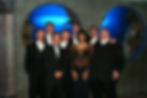
The band was a Ten-Piece Powerhouse (would later add one more horn and a male lead vocalist). Dan Nelson led us and was tenor sax/keys/vocals. TJ Raif played guitar and sang—a guy who had graduated from L.D. Bell in the late '70s, two decades before I started directing there. He worked in aircraft design connected to Carswell Air Force Base. Trey Smith held down the bass and worked for Microsoft. Bob Romans played keys and sang lead on Love Shack and Sledgehammer. He couldn't read music, but that didn't matter. In a funk band, the guy who plays by ear is often the most dangerous musician on the stage. Rob Claiborn, then Brian Davis, played trombone. Louisa Diaz handled vocals—Louisa was the frontwoman, a major talent who brought a presence to the stage that matched her voice. We burned through drummers, including Greg McGovern, and the return of Bob Cuba (the original drummer), but the core stayed tight (Dan, TJ, Trey, and Louisa).
Most of the band was ten years my senior. They played about four gigs a month and had found their balance between the stage and the rest of their lives. I lobbied for more. I was still young enough to think I could do it all.
We played everything from Tower of Power to Earth, Wind & Fire, Chic to Cameo, Stevie Wonder to Sly Stone and of course, Prince. Our monthly gig at Club Memphis in Addison ran from 10 p.m. to 2 a.m.—three sets, a blur of brass, sweat, and applause. We worked weddings at The Colonial, Bent Tree Country Club, corporate events, private parties at the Fort Worth Club, the Dallas World Aquarium—privately owned. The business card had a wave design and listed our style as "Soul, Funk, R&B." The phone number was 866-SO-FUNKY.
We were serious.

For New Year's Eve 1999, Mix 102.9 sponsored the Millennium Knight celebration at the InterContinental Hotel in Addison. Soul Tsunami headlined. People paid a thousand dollars a head to ring in the new century with us. At the time, I was finishing my master's degree at the University of North Texas, commuting up from Bedford in my 1995 Dodge Stratus. Yes, I drove a Dodge Stratus—and I was in charge of two people. The whole Will Ferrell thing from SNL. I would listen to Mix 102.9 on those drives, and I'd noticed they had shifted their playlist, dropping the '70s and '80s for something more modern. They had stopped playing Billy Joel.
This would not stand.
I started calling the station from my cell phone on the way to class. I told them I couldn't listen to their station anymore because they weren't playing Billy Joel, and because they weren't playing Billy Joel, I was listening to a CD instead, and therefore I could not listen to them or hear their sponsors until such time as they corrected this error. I probably made that call more than I should have.
When I walked into the InterContinental on December 31, 1999, and introduced myself to the Mix 102.9 personalities, they recognized me instantly.
"You're the Billy Joel guy."
I said yes, of course I was. I was from Long Island. Billy Joel was non-negotiable.
What I remember most from that night, besides the nickname that stuck, was the moment the sound died. We were mid-song, the room full of people who had paid serious money to dance into the new millennium, and suddenly the amplified sound went completely dead. The band kept playing—muscle memory and professionalism—but the crowd wasn't getting what they paid for.

Our sound guy had a limp. He walked slowly, carefully. I watched him from the back of the room as he realized what had happened. And then I watched him sprint—truly sprint—to the front of the stage to fix whatever cord had come loose. Dan Nelson leaned over between songs and said, "That is the absolute fastest I've ever seen that guy move."
That's not a profound moment. It's just a thing that happened, the kind of detail you remember twenty-five years later because you were in it.

I met Gwen in 2000, about eight months after the Millennium gig.
She changed everything.

Once she came into my life, we went to all the gigs together. On nights when Soul Tsunami wasn't performing, we'd still go to Club Memphis to see other bands—sitting in the crowd, enjoying the music, being together in rooms full of sound. We could show up for a 10 o'clock downbeat, enjoy a couple of hours, and still make it to school the next day.


Club Memphis had a "dance isle" and the rest of the room filled in anyway. There simply was no such thing as personal space when Soul Tsunami was on the docket.

Some weeknights the crowd was maybe fifteen people. One night Dennis Rodman walked in with his entourage—he had a construction company in Dallas after his stint with the Mavericks. That was the kind of place it was. You never knew.
This was before cell phones could distract you. Before life got too hard. We were young and building something together, and we didn't even know yet what it would become.
Hitting our stride, we recorded a session for wedding websites, etc. Among the tunes and one that survived to this day, was recorded a studio track of "We Are Family," with horns, and years later I used it as my ringtone. My phone would ring, and it was me, the version of me from before Kierstyn, before Fine Arts Director, before Music for All, before Indiana. J. LeRoi, checking in from the year 2000.
Soul Tsunami was more than a sideline. It was a bridge between worlds. Those gigs kept my performance chops sharp while I built my teaching career by day. The money helped; there was no DoorDash back then.
On Election Day 2004—Tuesday, November 2—the L.D. Bell Band won the UIL State Marching Contest in San Antonio.
We traveled through the night to get home. I walked in the door around 5 a.m., picked up the newspaper to confirm what we'd done, and lay down for twenty minutes. Then I took a shower. In those days, you still showed up to school the day after state, win or lose. I was heading back to work when I realized I had a gig that night with Soul Tsunami.
That was the day I decided I couldn't continue.
It was a hard decision, because it was something I loved. But the rest of the world was needing me more than the fun part. I couldn't keep splitting myself in half. The player and the teacher had been coexisting for six years, and the teacher had to win—not because Soul Tsunami didn't matter, but because L.D. Bell needed all of me.
My last gig was the next night, Wednesday. We already had a replacement in mind—Russell Echols had been subbing for me as my other commitments grew. A few days later, I met Russell at the QT on Highway 10 and 157 in Euless. I handed him the book—all the charts, all the arrangements, everything I'd played for six years.
And that was that.
No farewell gig. No last "Shining Star." Just a working musician passing the charts to the next guy at a gas station, the way it actually happens.
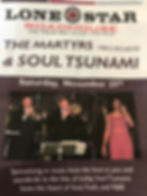
In 2017, thirteen years after I'd left the band, Trey's wife turned fifty. Someone had the idea to get Soul Tsunami back together for one more night. We played at Lone Star Roadhouse on a Saturday in November. The flyer used a photo from the Mix 102.9 Millennium event—me, the trombonist, and Louisa—because that was still the image that captured the band at its peak. Dan Potter, an old friend from my Bands of America days who used to come to our gigs, flew down from Tulsa just to be there. Gwen and I were about to leave Texas for Indianapolis. I was taking a job at Music for All. It felt like the right moment for one last night as J. LeRoi—to put on the suit, pick up the horn, and remember who I was before I became who I am.
The setlist that night opened with Tower of Power's "What Is Hip" and ran through all the songs that had carried us through those years: "Mustang Sally," "Respect," "I Wish," "Brick House," "Jungle Love," "Play That Funky Music." We closed, as we always did, with the whole room on their feet.
It's been a fun journey with Gwen. From those early nights at Club Memphis to now, planning another move back to Texas, our daughter about to graduate, a rescue dachshund barking at everything from the couch where Maynard used to sleep.
The horn went back in the case so I could do the bigger work. But it's still there. I'm still a trumpet player—especially as a high-note artist. I just don't play regularly anymore.
Some nights, though, when Kierstyn is practicing in the other room and I hear her reaching for the upper register, I remember what it felt like to stand in the horn section at Club Memphis with the downbeat at ten, Gwen somewhere in the crowd, the whole night ahead of us.
Before it got hard. When it was just the music.

